Zero Tolerance to Sexual Harassment
The law has changed →

Unite survey: Sexual Harassment endemic in UK workplaces
 Women workers are being assaulted at work and feel unable to report incidents
Results of comprehensive Unite survey – polling over 6,000 female members - across all 19 sectors Unite represents on whether they had experienced sexual harassment while at work, travelling to work or from a colleague including in or out of work hours show harassment is endemic in workplaces.
Top level findings
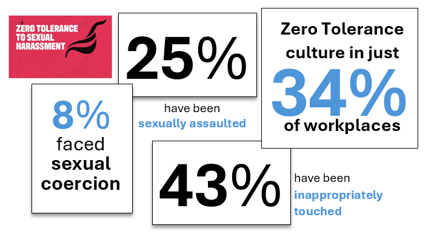
25 per cent have been assaulted
Over 8 per cent been the victim of sexual coercion
56 per cent been the recipient of sexually offensive jokes
55 per cent had experienced unwanted flirting, gesturing or sexual remarks,
43 per cent had been inappropriately touched
28 per cent had been shared or shown pornographic images
Unite's survey found just 26 per cent of respondents felt their employer had done enough to promote a sexual harassment zero-tolerance culture within the workplace, while 34 per cent did not believe there was a zero-tolerance approach to this behaviour at their place of work.
Unite general secretary Sharon Graham said: "Staff safety should be among the highest priorities for employers, but the results of our survey are damning and show women workers are being failed by bosses.
"Nobody should suffer sexual harassment in the workplace. Unite is committed to taking a zero-tolerance approach and we will put every employer turning a blind eye on notice.
"We will fight every step of the way to stamp out workplace harassment once and for all. Every worker deserves a safe working environment and should feel able to report harassment."
Unite has four key demands:
The introduction of a standalone sexual harassment policy
Mandatory training on sexual harassment for all employees and a commitment to recognise union equality representatives with paid time off
Extended deadlines for being able to make a claim in an employment tribunal
Government backed extra legal protections, for example third party harassment and sexual harassment should be treated by the Health and Safety Executive as a workplace injury.
Anonymous comments from Unite members
Two of my friends were sexually assaulted on a work trip. I was involved in the investigation for months. The man in question is still flying in a managerial position. BA did nothing to support my friends or keep them safe by keeping this man in the company." Woman in the civil air transport industry
"I was sexually harassed by my manager in a previous job for several months. I finally built up the courage to confide in the company owner who reassured me that I'd done the right thing by telling him. He sacked me the following morning... it devastated me and drove me away from working in the construction industry for many years." - Woman in construction industry
"I reported disgusting behaviour and sexual comments from contractors which I had put up with for over two years and nothing was ever done about it. I refused to work with them in the end and they were still given work for over 12 months afterwards until another female colleague reported them and then action was finally taken. It made me feel worthless knowing that nobody had taken any notice of what I had said." - Woman in the food, drink and agriculture industry.
Time for Zero Tolerance to Sexual Harassment
The law is getting stronger. Your employer must take all reasonable steps to prevent sexual harassment at work - and must not permit harassment by customers, service users or other third parties.
The law is getting stronger. Your employer must take all reasonable steps to prevent sexual harassment at work - and must not permit harassment by customers, service users or other third parties.
From 30 October 2026, new legal protections will strengthen employers’ responsibilities to tackle workplace harassment.
The Worker Protection (Amendment of Equality Act 2010) Act 2023 introduced a legal duty on employers to take reasonable steps to prevent sexual harassment, which came into force on 26 October 2024.
Now, under the Employment Rights Act 2025, this duty is being strengthened. From 30 October 2026, employers must take all reasonable steps to prevent sexual harassment from happening in the first place. The law will also place a specific obligation on employers not to permit harassment by third parties, including customers, clients and service users.
This means employers must do more than react to incidents after they happen. They must proactively identify risks, put effective preventative measures in place and take action to protect workers from harassment.
No one should have to tolerate sexual harassment as part of their job. Whether it comes from a colleague, manager, customer or service user, harassment must never be accepted as ‘part of the job’.
Unite is campaigning tirelessly to raise awareness of these strengthened legal protections and to ensure employers meet their responsibilities. We will continue to fight for safe, respectful workplaces where every worker is protected, treated with dignity and able to do their job free from harassment.
Zero tolerance means prevention, protection and action. Let’s make it happen.
See below for the Unite toolkit as well as downloadable materials with more information on this new legislation and how Unite can help you say NO to sexual harassment in the workplace.
Campaign briefing & toolkit
Unite wants reps and members to feel confident they have the support they need to speak out on this very serious issue.
This new legislation must strengthen the legal protections for workers. See below for downloadable materials with more information on this new legislation and what your employer should be doing to prevent sexual harassment.
Included is a model policy, risk assessment and survey that can also be adapted for your workplace. Please do not hesitate to contact Unite Equalities if you need any materials.
Download your copy today and get set to plan your assessment.
Risk assessment and checklist
Read onlineGuide to negotiating a policy on sexual harassment
Read onlineModel policy [PDF]
Read onlineModel policy [Word - editable]
Read onlineDigital Zero Tolerance Business Card
Read onlineZero Tolerance to Sexual Harassment A5 flyer- What you can do
Read onlineZero Tolerance to sexual harassment A3 poster-join Unite
Read onlineZero Tolerance to sexual harassment facts vs fiction
Read onlineWhat is sexual harassment?
Sexual harassment is defined in the Equality Act 2010 as unwanted conduct of a sexual nature which has the purpose or effect of violating someone’s dignity, or creating an intimidating, hostile, degrading, humiliating or offensive environment for them whether the perpetrator intended this or not.
If you have been sexually harassed or witness sexual harassment and wish to talk to someone then contact your rep in the first instance or email Unite Equalities. See below for websites providing more help and assistance.
Posters and other materials
Help and assistance
If reviewing this page has been distressing, please see the links below of some organisations where you may be able to access specialist help.
- Citizens Advice
- Galop – LGBT+ sexual violence support
- NHS
- Rape Crisis - England and Wales
- Refuge
- Rights of Women Equality Advisory and Support Service
- Safeline
- Samaritans
- The Survivors Trust
- Victim Support
Sexual harassment should not be tolerated and we would encourage you to report it. You can also seek advice and support from your local Unite representative if appropriate, or use the confidential Unite Women email.