Abuse Doesn't Fly
Ask your MP to back EDM 639

End the abuse, aggression and assault of aviation workers
Every aviation worker has the right to work free from abuse, threats, intimidation and violence. Abuse towards airport and aviation workers is not “part of the job”, it is a workplace safety issue that affects workers across the whole airport, on to the aircraft.
Unite is calling for a clear, national, worker-led approach to end abusive and disruptive passenger behaviour.
Work in aviation? Are you in a union? If not, then join Unite today
Zero tolerance to abuse, aggression and assault
Aviation workers face unacceptable levels of abuse from passengers.
“A passenger slapped my hand after refusing to check in a hand baggage, a passenger called me a b**** when refused lounge entry, the list goes on.” Heathrow Airport worker
“I have regularly witnessed staff being subjected to verbal aggression, intimidation, and inappropriate behaviour from passengers, particularly during delays, cancellations, or security disruptions. These situations place staff under significant emotional strain and can escalate quickly.” Glasgow Airport worker
Aviation workers face unacceptable levels of abuse from passengers. A recent Unite survey of over 2,000 workers including ground handlers, passengers service assistants, security, and customer service agents at the UK's major airports found:
72% of ground staff experience verbal abuse at least monthly.
71% of cabin crew experience verbal abuse at least monthly
31% of ground staff have experienced physical assault.
42% of cabin crew have experienced physical assault.
More than 97% of respondents want an industry-wide charter to tackle abuse from kerbside to airside.
That's why Unite is calling for a clear, national, worker-led approach to end abusive and disruptive passenger behaviour.
Campaign updates
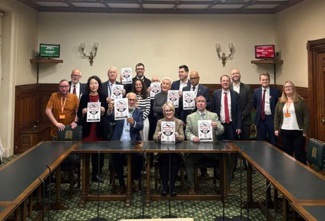
On 19 October 2026, Unite met with Unite-sponsored MPs in Westminster to turn the survey findings into action and build political pressure on the government and aviation industry.
Unite is demanding a national, worker-led approach to tackling abuse, with unions involved in shaping the response. This must include effective powers for airports and airlines to ban abusive passengers, better information-sharing to identify repeat offenders, and minimum standards for incident reporting, security measures and support for workers.
Action must cover the whole passenger journey, from airport entrances and check-in desks to security, boarding gates and aircraft. Abuse cannot be tackled by dealing with incidents in isolation or waiting until passengers are on board.
The message to Westminster is clear: aviation workers deserve protection, not empty promises. Unite will continue to push for practical action that puts workers’ safety first.
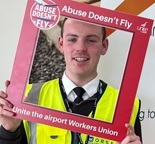 As a result of the Employment Rights Act 2025, changes to the law around third-party harassment will come into force on 30 October 2026. These changes will mean employers must take all reasonable steps to prevent harassment of workers by third parties, such as customers or passengers.
The new provisions will make employers liable for harassment from third parties, such as passengers, unless they have taken all reasonable steps to prevent it.
Harassment means unwanted conduct related to a relevant protected characteristic which has the purpose or effect of violating a worker’s dignity or creating an intimidating, hostile, degrading, humiliating or offensive environment for them.
The relevant protected characteristics are age, disability, gender reassignment, race, religion or belief, sex, and sexual orientation.
Workplace reps should ensure that their employers are complying with the new requirements. Thompsons Solicitors have further information on the changes.
The abuse aviation workers face from passengers will often but not always meet the legal definition of harassment. While the new provisions are therefore an important step forwards, they are not a “silver bullet” for tackling abusive air passengers and further measures are therefore needed.
SIGN EDM 639 | Get your MP to sign the “Abuse Doesn’t Fly' campaign Early Day Motion, tabled by Peter Lamb MP
See the list of MPs that have signed and then use the action below ↓Campaign background
Unite the union is calling for ↓
A clear, national, worker-led approach to abusive and disruptive passenger behaviour.
Airports and airlines to be given the power to ban disruptive and abusive passengers, and the power to coordinate between one another to make this effective.
Minimum standards to be introduced across the industry, ensuring workers are adequately protected from abuse and properly supported when incidents do occur.
Unite is also demanding ↓
Disruptive passenger bans
Minimum standards
Disruptive passenger bans
Currently, individual airlines can issue bans to disruptive or abusive passengers. But this is not an effective deterrent, because a passenger banned from one airline can simply fly the same route with another operator.
Unite is calling for coordinated action against serious or repeat offenders, including the power to ban the most severely abusive and disruptive passengers from multiple airlines or airports.
Too often the conversation focuses on incidents on board the aircraft. But by this point, it is too late. Abuse often starts much earlier in the airport journey. If abuse is not challenged properly at the airport level, the risk is simply moved further down the passenger journey, including onto the aircraft. That is why it is crucial that a ban can be triggered by behaviour in an airport, not just on board an aircraft.
Minimum standards
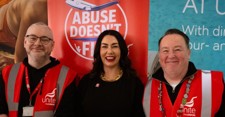 Minimum standards must be introduced across the industry, ensuring workers are adequately protected from abuse and properly supported when incidents do occur. This should include:
Increased police presence, including unarmed police, during peak times such as Easter and Summer.
Mandatory zero tolerance signage.
Better recording procedures for abuse incidents at airports.
Panic alarms or alternatives to ensure worker safety in key airport areas.
Counselling services to workers struggling due to abuse, aggression or assault.
Training for workers on how to report, escalate and respond to abusive or threatening behaviour.
Regular review of incidents by operators, joint with union representatives.
Regular review by operators, joint with union representatives, of aggravating factors such as alcohol, delays, cancellations, queues, missed connections and disruption.
SIGN EDM 639 | Get your MP to sign the “Abuse Doesn’t Fly' Early Day Motion
Has your MP signed? If not get them to add their name today →Check out who has signed EDM 639